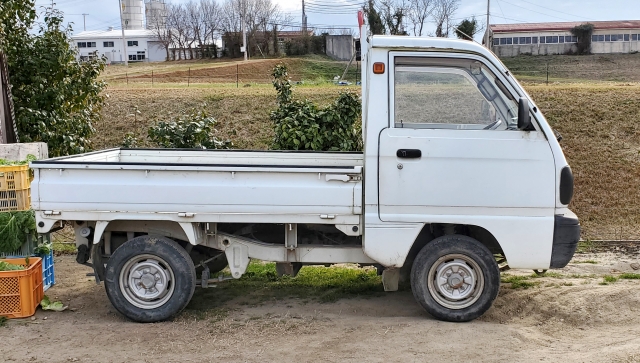
A curious phenomenon is unfolding across American farms and ranches. In a country synonymous with oversized pickup trucks, 25-year-old Japanese mini-trucks—known as kei trucks—are suddenly selling like hotcakes, with imports reaching roughly 10,000 vehicles a year in recent years.
“Cheap, nimble, practical, and virtually indestructible.” Drawn by that reputation, American farmers and ranchers are increasingly turning their attention to these quarter-century-old Japanese workhorses. What makes it all possible is America’s “25-Year Rule,” which exempts imported vehicles over 25 years old from strict federal safety and emissions standards.
Yet one of the main reasons these aging mini-trucks are thriving has less to do with U.S. regulations and more to do with a notorious system back in Japan.
In Japan, car owners are subject to mandatory, rigorous vehicle inspections every two years. Widely resented by domestic drivers as a costly and bureaucratic headache, the system enforces strict maintenance standards. Ironically, it is precisely this grueling screening process that keeps 25-year-old kei trucks in remarkably good condition on the Japanese used market. In effect, a regulation loathed at home has been quietly functioning as a quality-assurance pipeline for American buyers.
Of course, the supply of quarter-century-old trucks is finite, and it is only a matter of time before inventory falls short of surging demand.
Enter Toyota. In 2026, the automaker announced plans to build a new U.S. plant to manufacture compact pickup trucks—a clear sign that the auto giant had no intention of letting the booming niche market for affordable, utilitarian mini-trucks, pioneered by secondhand kei imports, slip through its fingers.
The inspection fees Japanese drivers begrudgingly pay every two years end up helping American farmers, and ultimately trigger a major factory investment by an automotive titan. If that isn’t the “butterfly effect” in action, what is?
Japan is full of laws and business customs that locals take for granted—or grumble about as outdated and excessive. Step back and look through a global lens, however, and you might find that those very quirks and regulatory gaps hold the spark for the next big business breakthrough.
*** We are a textile trader specialising in the export of high-quality Japanese-made textile products. Please do not hesitate to contact us if you have any enquiries regarding product specifications or quality. ***